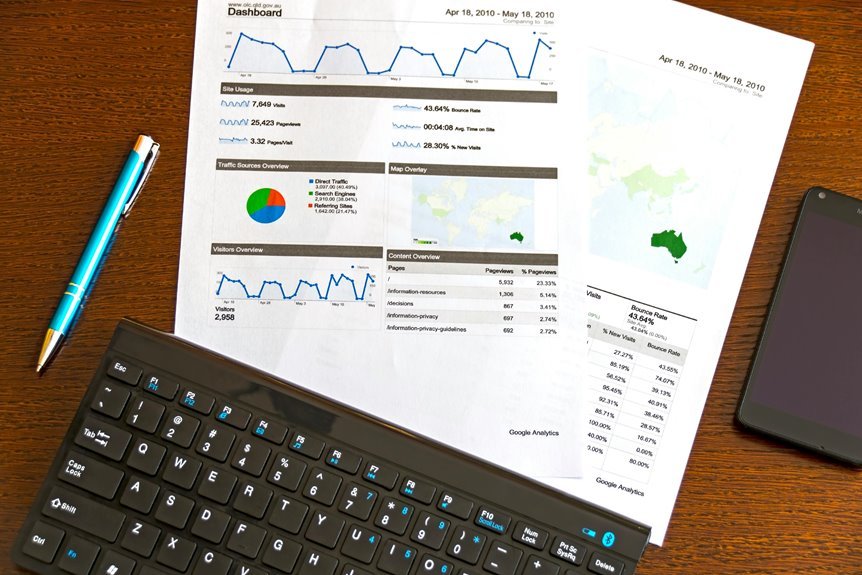
Financial Performance Dashboard: 101023442, 101030500, 101040500, 104439950, 105517881, 107502735

The Financial Performance Dashboard for accounts 101023442, 101030500, 101040500, 104439950, 105517881, and 107502735 offers a structured overview of financial metrics critical for assessment. It emphasizes return on equity and debt-to-equity ratios, presenting an analytical tool for stakeholders. This dashboard not only aids in trend analysis but also fosters informed decision-making. Understanding its implications could lead to strategic advantages that may reshape financial management practices. What insights could emerge from a deeper exploration?
Importance of Financial Performance Dashboards
Although many organizations rely on traditional financial reports, the importance of financial performance dashboards cannot be overstated.
These dashboards employ data visualization techniques to present complex financial data in an accessible format. By facilitating quicker, more informed decision-making, they empower stakeholders to identify trends and make proactive adjustments.
Ultimately, financial performance dashboards enhance strategic agility, enabling organizations to navigate the dynamic economic landscape effectively.
Key Metrics to Track
To maximize the effectiveness of financial performance dashboards, organizations must identify and track key metrics that offer insights into their financial health.
Key ratios, such as return on equity and debt-to-equity, reveal crucial performance trends. Monitoring these metrics enables organizations to make informed decisions, ensuring they adapt to changing market conditions while facilitating strategic growth and enhancing financial freedom.
Tips for Effective Dashboard Utilization
Utilizing a financial performance dashboard effectively requires a strategic approach that prioritizes clarity and actionable insights.
Successful dashboard design should emphasize intuitive navigation, ensuring users can quickly access pertinent data.
Enhancing user engagement through interactive elements fosters deeper analysis and informed decision-making.
Regularly reviewing and updating dashboard content ensures relevance, thereby empowering users to derive maximum value from their financial performance assessments.
Conclusion
In conclusion, the Financial Performance Dashboard serves as a vital tool for stakeholders to navigate the complex landscape of financial health across various accounts. By focusing on key metrics like return on equity and debt-to-equity ratios, users can discern patterns and correlations that facilitate informed decision-making. The dashboard’s regular updates and intuitive design further enhance its utility, allowing for strategic agility and effective financial management, ultimately fostering a proactive approach to navigating fiscal challenges and opportunities.